

forget the dolls
what hand-me-down Barbie clothes taught me about care, history, and stewardship

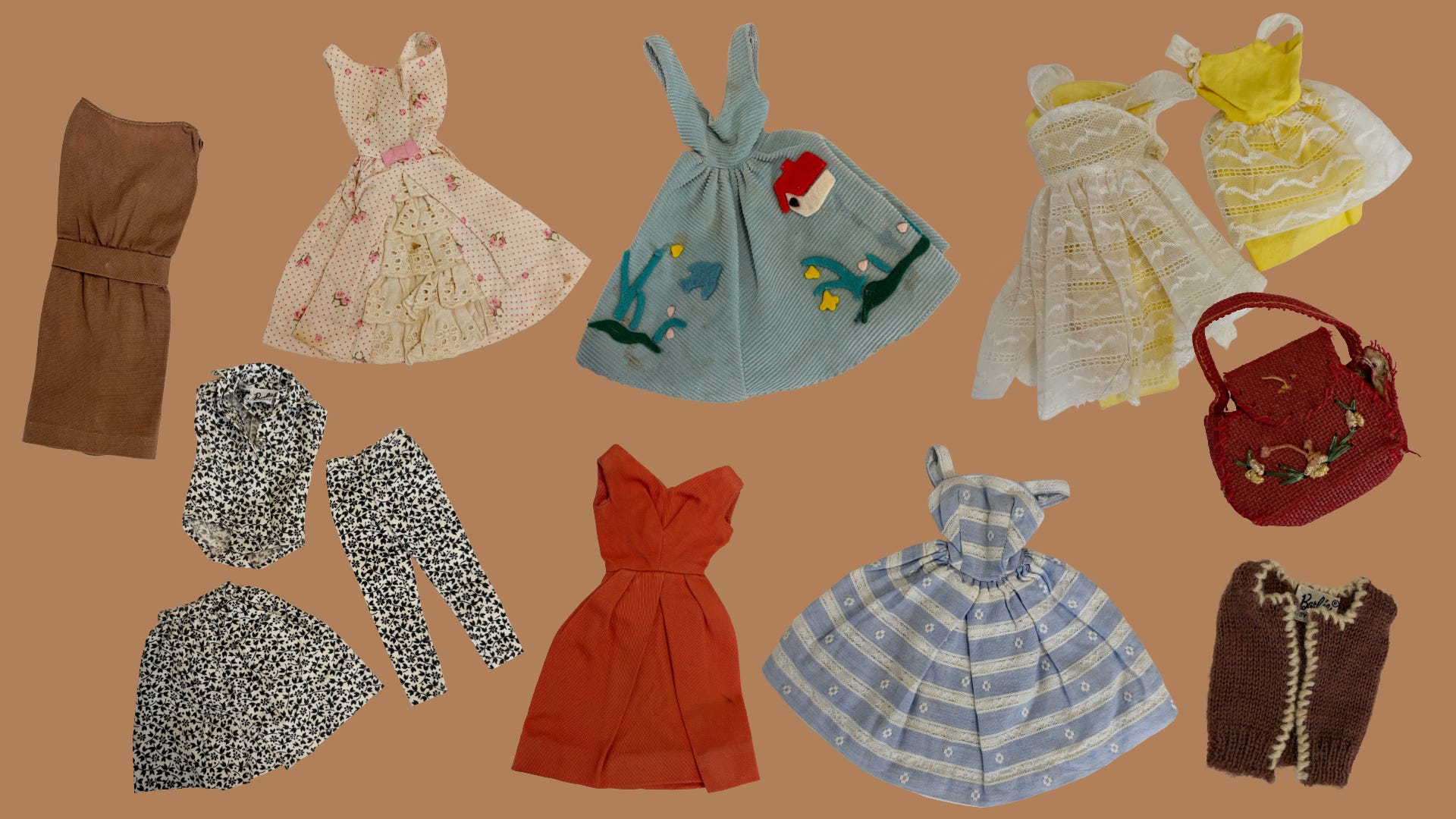
Each time I visit my parents, my mom asks me to sort through a certain category of things from my childhood, to see if it’s something I want her to hold onto or if I’m okay with letting go. I understand this impulse, and am happy to participate. I already feel burdened by possessions after having occupied the same apartment for six years; I can’t imagine the psychic weight of three decades of stuff! So, though I am an archivist at heart, I’ve thrown out or given away many childhood relics: old assignments and drawings, board games, a monogrammed stool, Legos and Duplos and Playmobil.
This past December, my mom brought out two big boxes of Barbies and Barbie clothes. My Barbies were a mix of inherited and brand new. I had several 1950s originals, some hand-me-downs from a collector neighbor and her slightly older daughter, and many that I had the pleasure of opening straight from the box in the 1990s. But the dolls weren’t what interested me. I wanted to sort through the clothes.
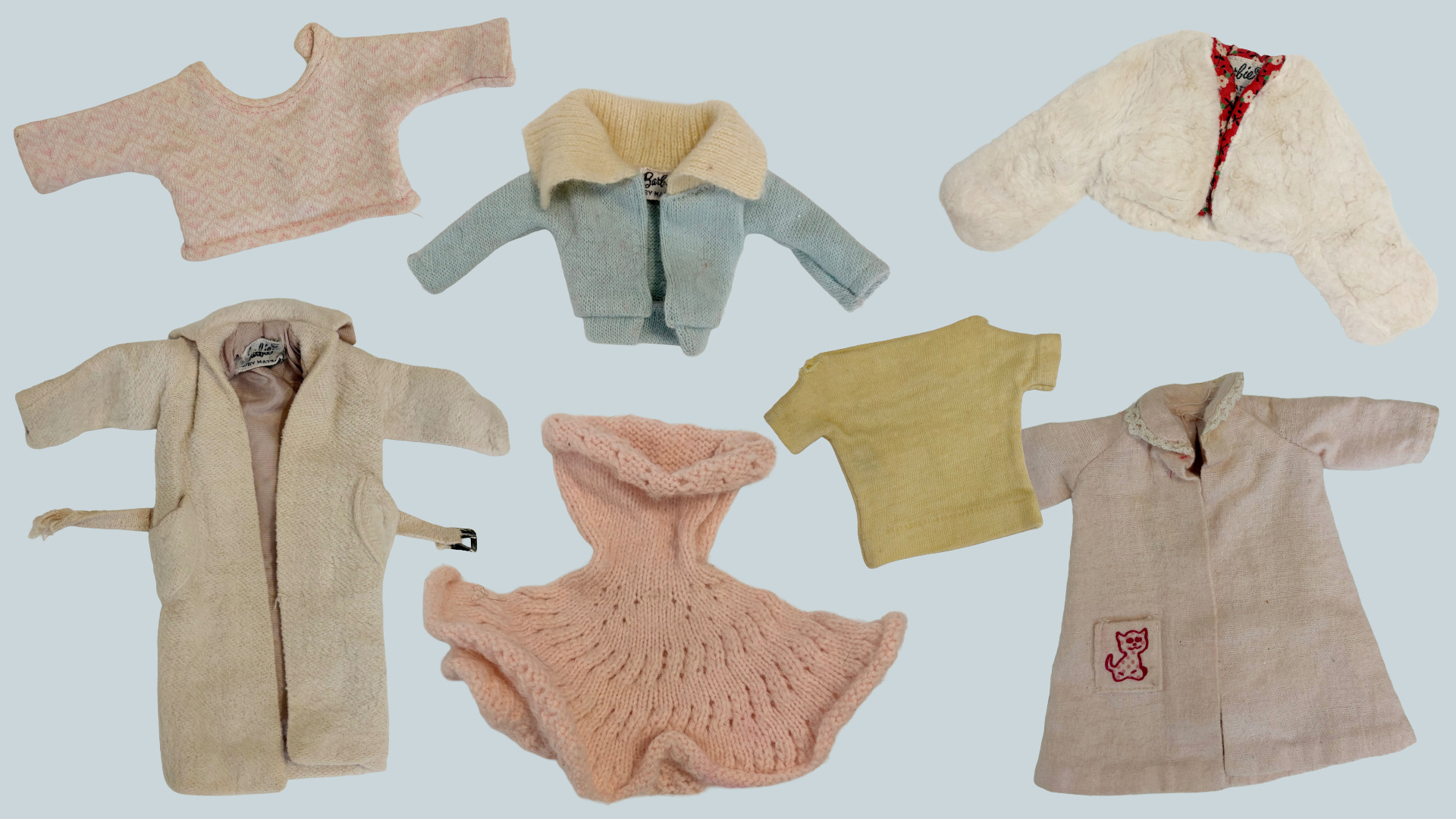
I don’t remember playing with Barbies much for the narrative or the interpersonal drama, though I’m sure that was part of the appeal. What I do remember is what it felt like to dress them, to shove a permanently outstretched arm into a narrow sleeve, to navigate a pointed foot through a delicate pant leg. While I certainly had my share of new Barbie clothes, they mostly served to highlight just how good the vintage pieces were. They had panache! Persona! They fastened with zippers and snaps, rather than Velcro strips that quickly warped and lost their grip.
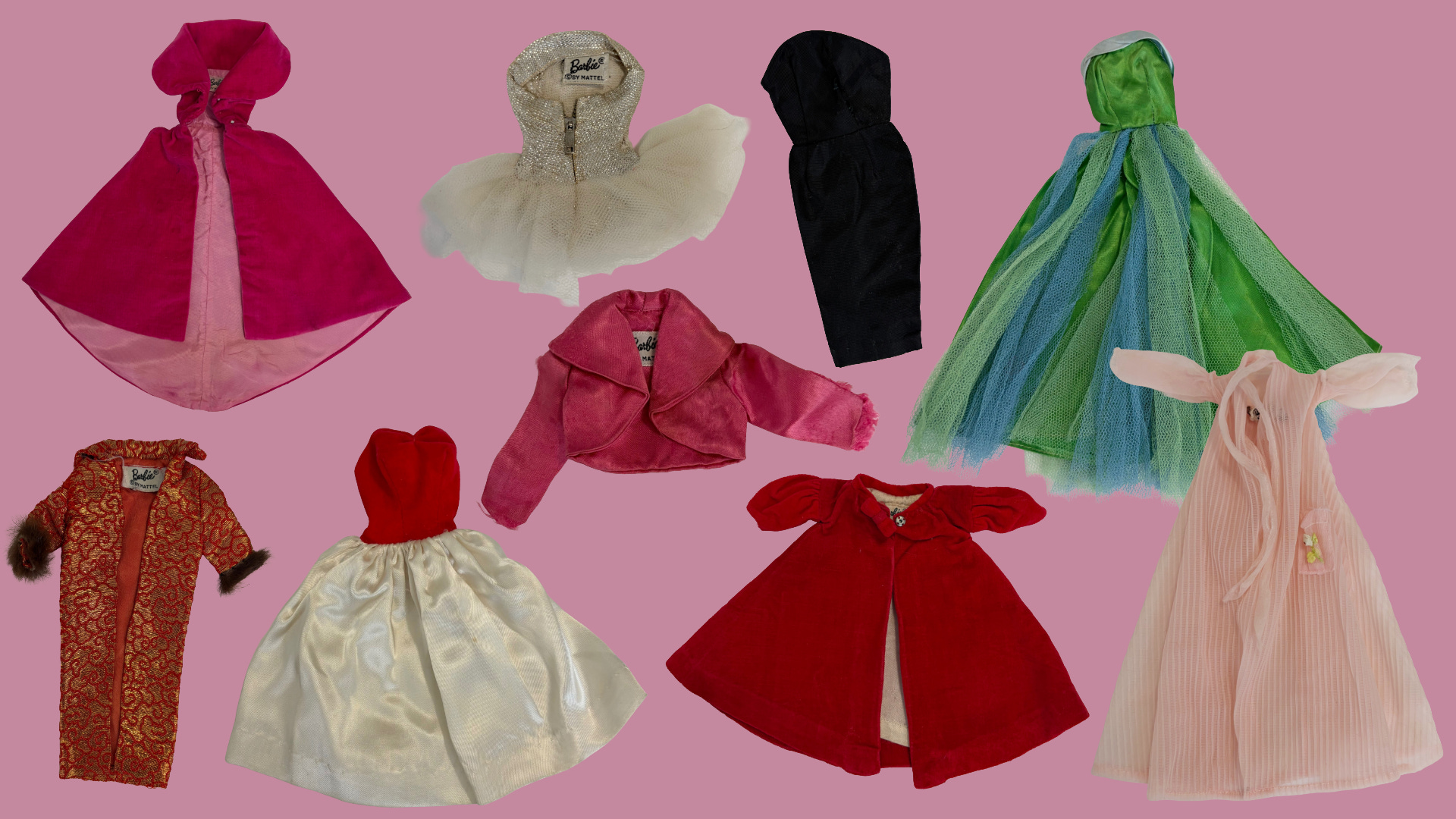
Those vintage clothes were transporting. In those clothes, Barbie felt less like a kit (Barbie goes to the beach! Popstar Barbie!) and more like a person. She had an actual wardrobe, not just a catalogue page. I experienced that collection of older Barbies clothes much like I would the contents of an estate sale, an archaeological investigation, the wardrobe of a woman who had truly lived. The older clothes had variety, but there was a throughline. The person who wore a dramatic velvet cloak and ball gown was the same person who enjoyed the simplicity of a crisp cotton three-piece set.
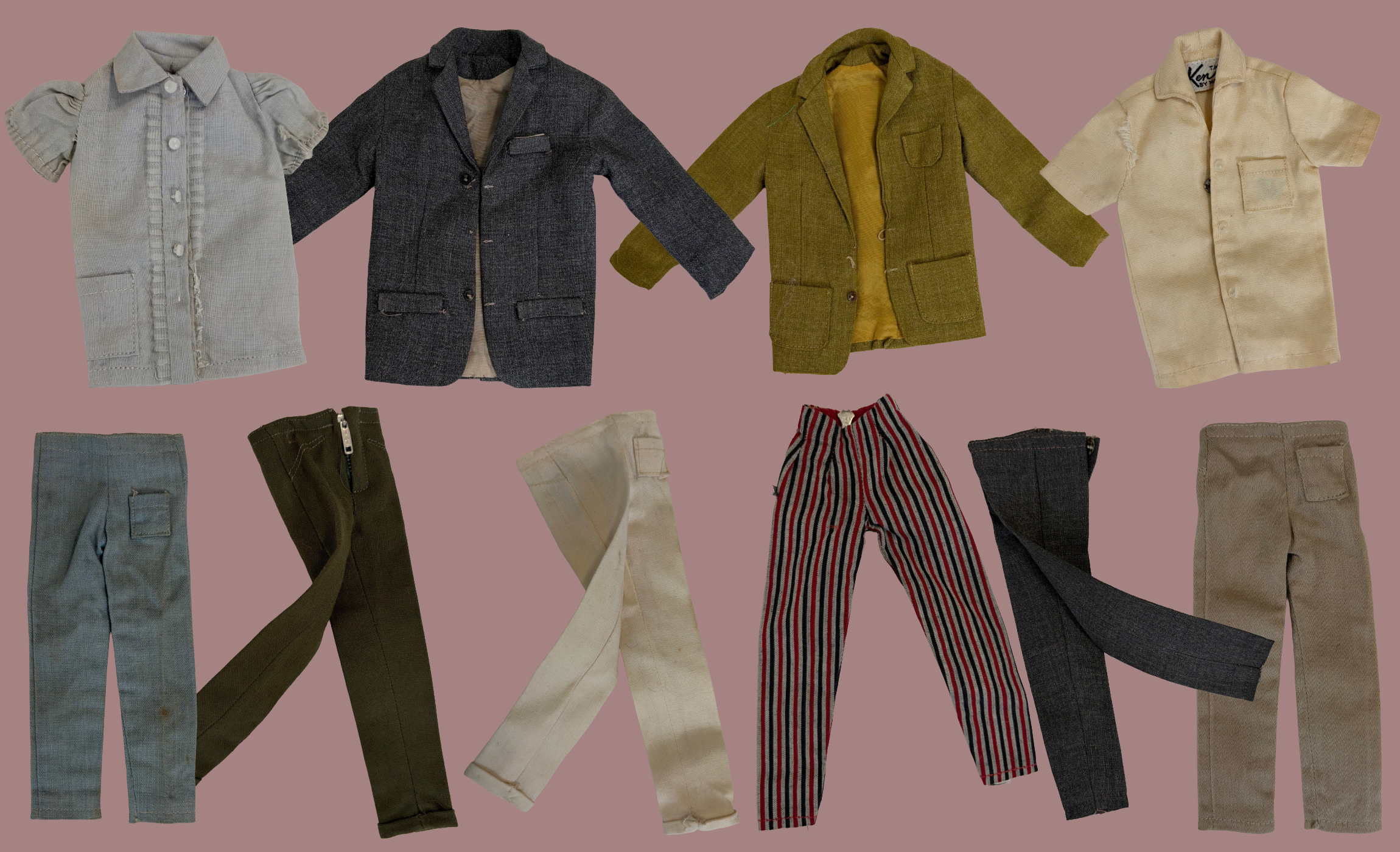
In the midst of sorting through the clothes, I ordered Dressing Barbie by Carol Spencer, a memoir from one of Mattel’s early fashion designers. Spencer began working there in 1963, and while most of the clothing I inherited predates her tenure, the book is still an amazing portrait of what it was like inside the company—and of the evolution in care, quality, and the pace of production over her thirty-five years. She left in 1998, and her account of tightening budgets and loosening standards in her final years mirrored what I was noticing in the clothes from my era.
I sorted through every single outfit in those boxes, tossing the items with obvious and severe damage. I did not feel called to keep a single piece of Barbie clothing I got new (even though at this point, I think most of that clothing could be classified as ‘vintage’ now, too). It was the hand-me-downs from the 1950s and 60s that I still wanted. After I’d sorted them, I placed them individually into delicate laundry bags, washed them, dried them on low, then spent over an hour at the ironing board, smoothing out every wrinkle. This is the power of vintage clothing: I feel more like its steward than its owner, attached to what it meant not only to me but to someone else.
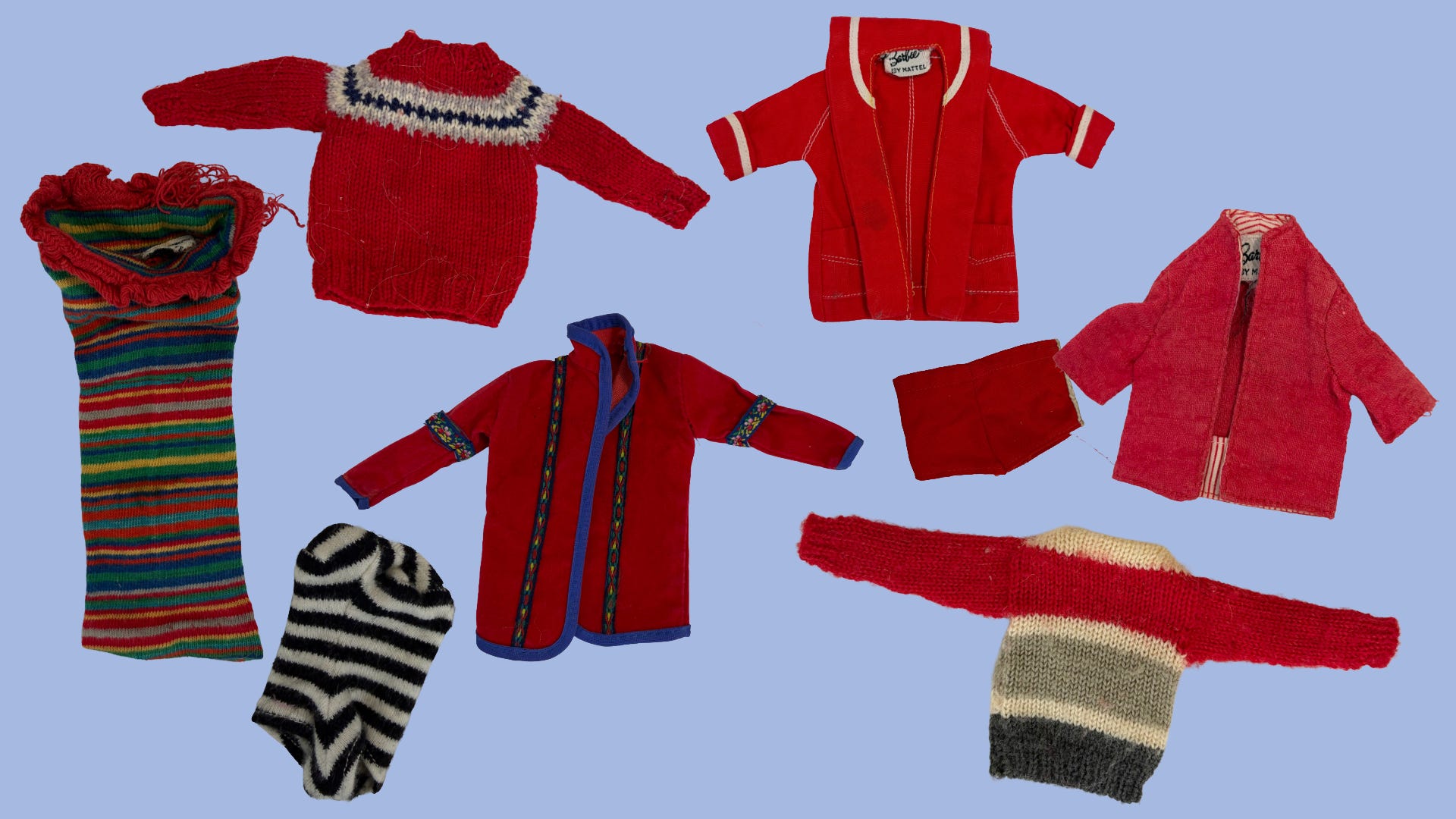
It doesn’t escape me that much of my research was possible thanks to a small group of obsessive people online who painstakingly photographed and documented the names and dates of every Barbie outfit sold between 1959 and 1963. An enthusiasm for vintage clothing and the impulse to archive go hand in hand. The vintage enthusiast recognizes that the past is equally as important as the present; the archivist recognizes that the present will soon become the past.
Looking back, I think my Barbie clothing collection was my first exposure to vintage clothing as something to be desired and valued for its age and distinctiveness. Even as a child, I understood the power of thinking, I will be the only one wearing this now, but I am not the only one to have ever worn it. I was already practicing stewardship, even if I didn’t yet have the language for it.


This is so inspiring! Wish that I had the Barbie clothes I hand made in the mid 60s..a turtleneck from a cable knit sock, tweed miniskirts. Sigh.
Gorgeous writing! Those lines about remembering how to clothe a Barbie is so sensory and visceral!